Does Your Dog Panic Every Time You Leave?
Your dog isn't being stubborn. They're panicking when left alone.
I help your dog feel safe, build confidence, and learn to relax when you're away.
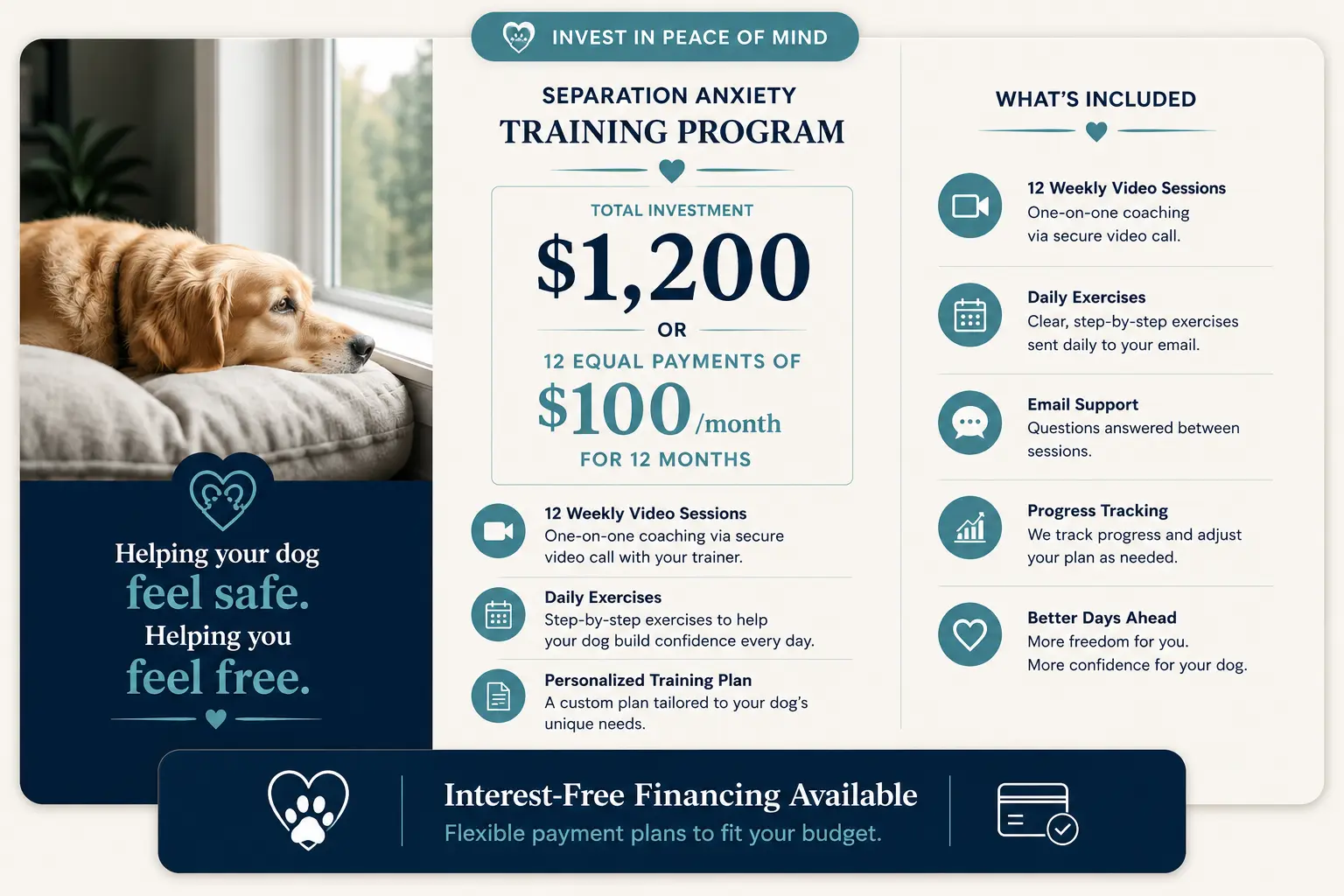
$1,200 for 12 Weekly Video Sessions. (details below)
Schedule a Free Consultation & Ask about Free Financing


You shouldn't have to worry every time you leave your house.
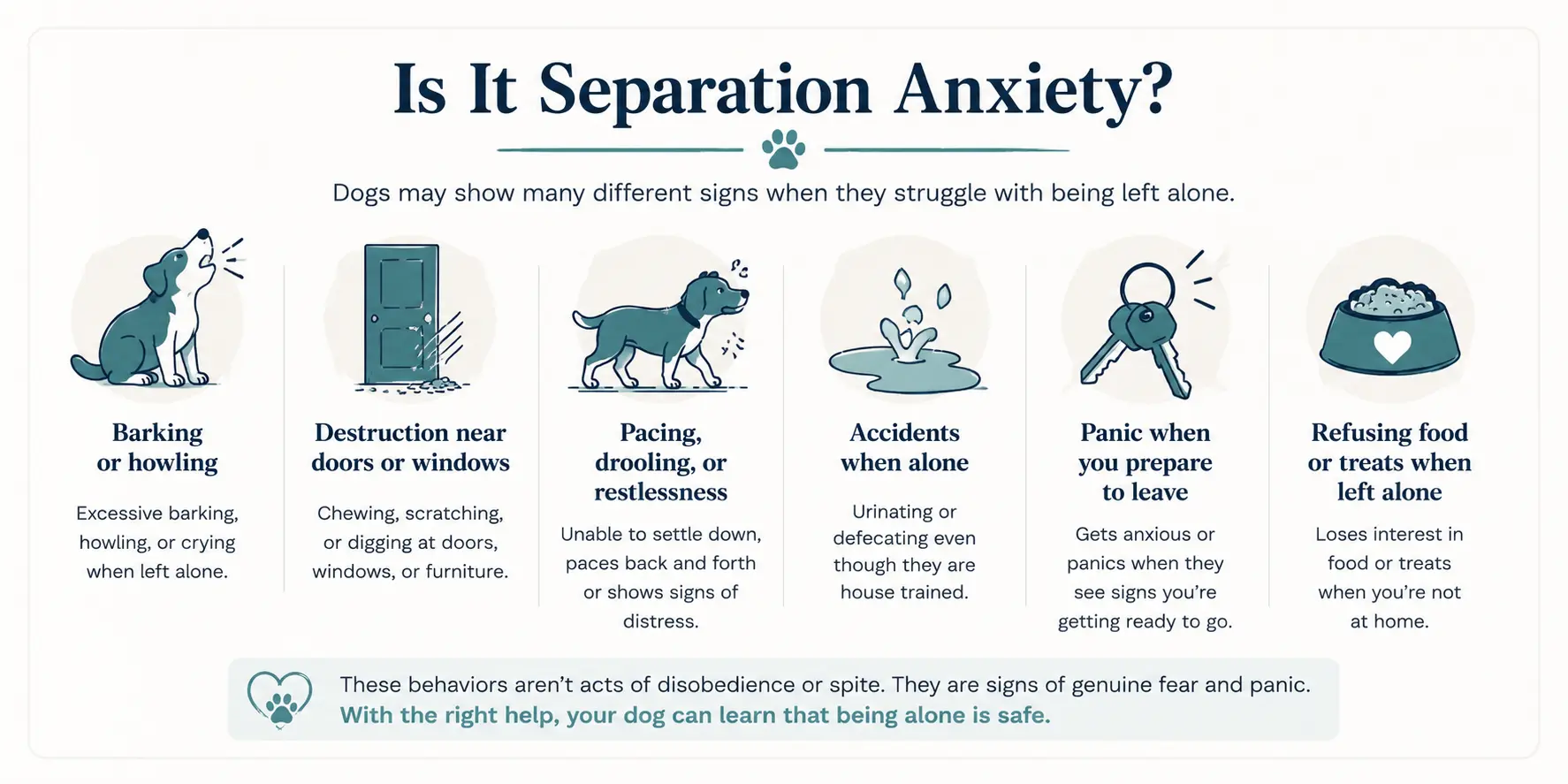
If your dog barks for hours, destroys furniture, scratches at doors, has accidents, or panics the moment you pick up your keys, you're not dealing with a "bad dog."
The good news is that separation anxiety can improve with the right plan, patience, and professional guidance.
Is it Really Separation Anxiety? Check out this blog to see.
Common Questions
If your dog only struggles when you leave—and shows things like barking, destruction, pacing, or accidents—there’s a good chance it’s separation anxiety.
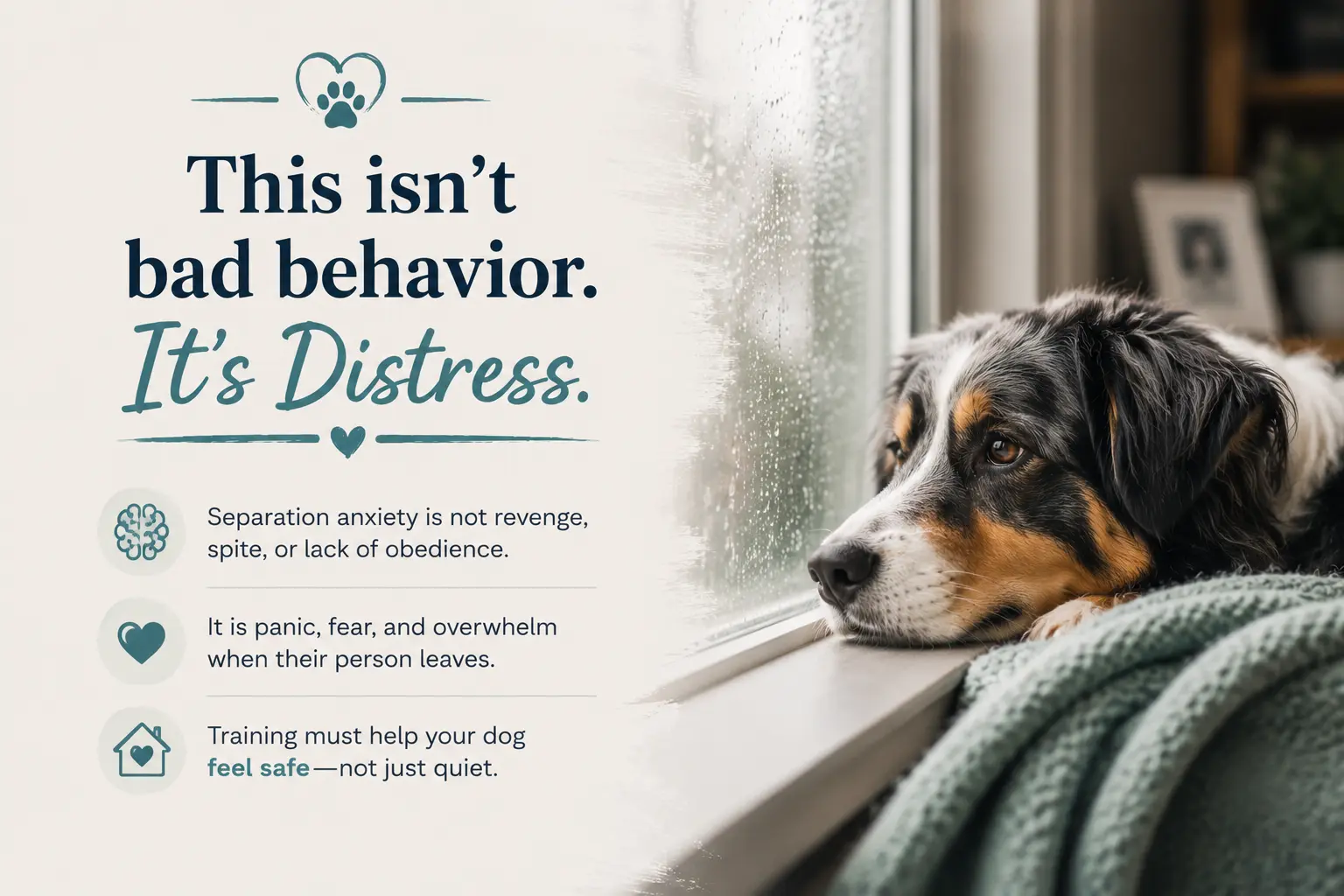
This isn’t about your dog being stubborn or disobedient.
It’s about how they’re handling being alone.
Understanding that difference is the first step to actually helping them.
It depends on the dog.
Some dogs improve quickly. Others need more time.
What matters most is building progress in a way that doesn’t overwhelm them.
This isn’t about rushing—it’s about creating lasting change.
Most dogs can improve significantly.
The goal isn’t perfection—it’s helping your dog feel calm and comfortable when you’re away.
With the right approach, many dogs go from panicking to being able to relax at home.
Yes,but there are options we can discuss. It will depend on if it is true Separation Anxiety
We’ll build a plan that works with your real life as much as possible while still helping your dog succeed.
The goal is progress you can actually maintain.
It depends on the dog.
For some dogs, a crate can actually increase anxiety.
For others, it can help—but only if it already feels safe to them.
We’ll figure out what works best for your specific dog.
Tools can sometimes reduce symptoms—but they don’t address the underlying anxiety.
If your dog is panicking, the goal is to help them feel safe—not just quiet.
That’s where real progress comes from. It maybe necessary to add medications to the training program
Yes.
Dogs of any age can learn new patterns with the right approach.
It’s less about age and more about having a clear, structured plan.
Most training focuses on behavior.
I focus on what’s driving the behavior—and use a structured process to create real change.
You’re not just getting tips.
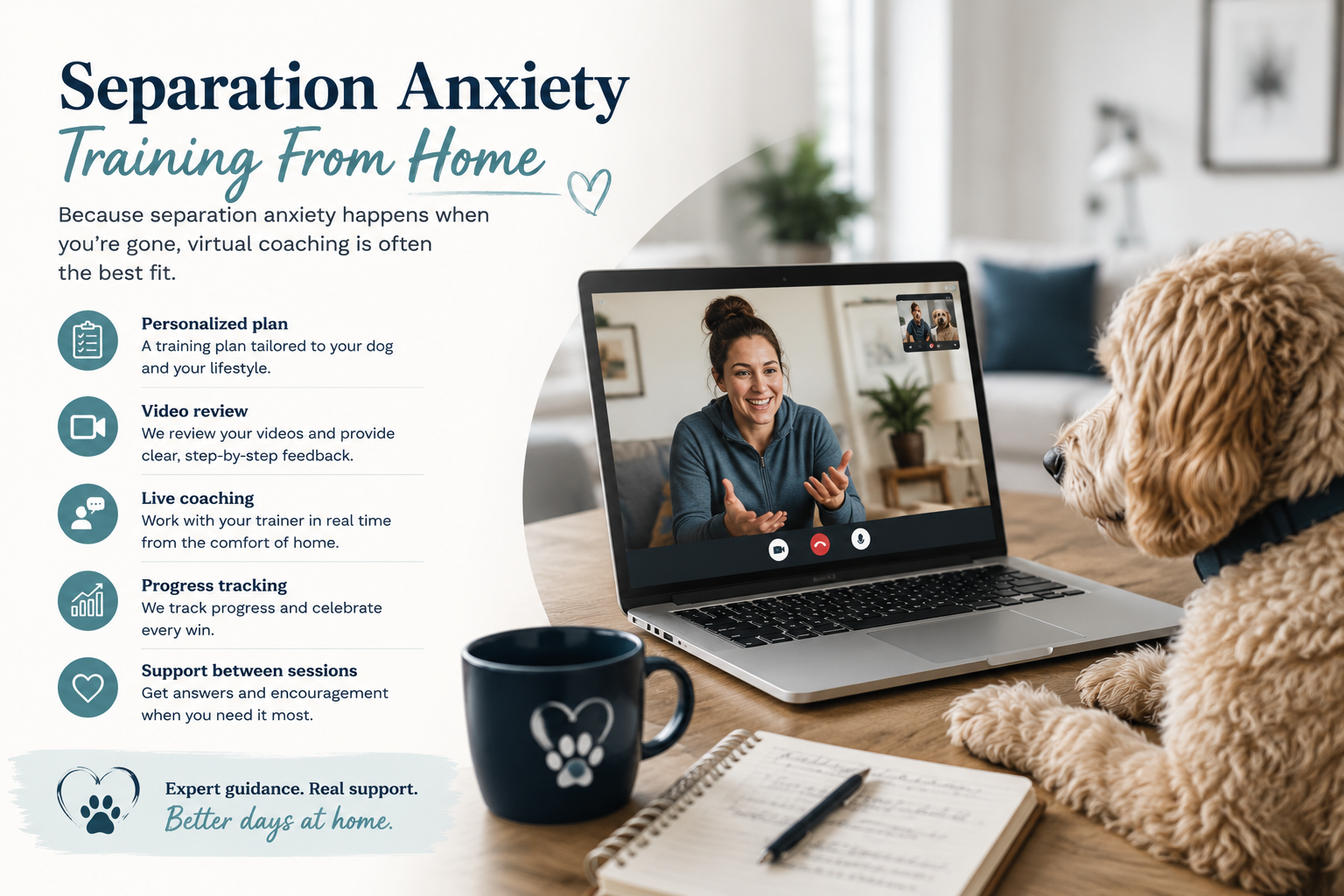
You’re getting a clear plan and guidance every step of the way.
We’ll talk through:
- What your dog is currently doing
- When it’s happening
- What you’ve already tried
Then I’ll give you a clear direction on what your next step should be.
No pressure—just clarity.